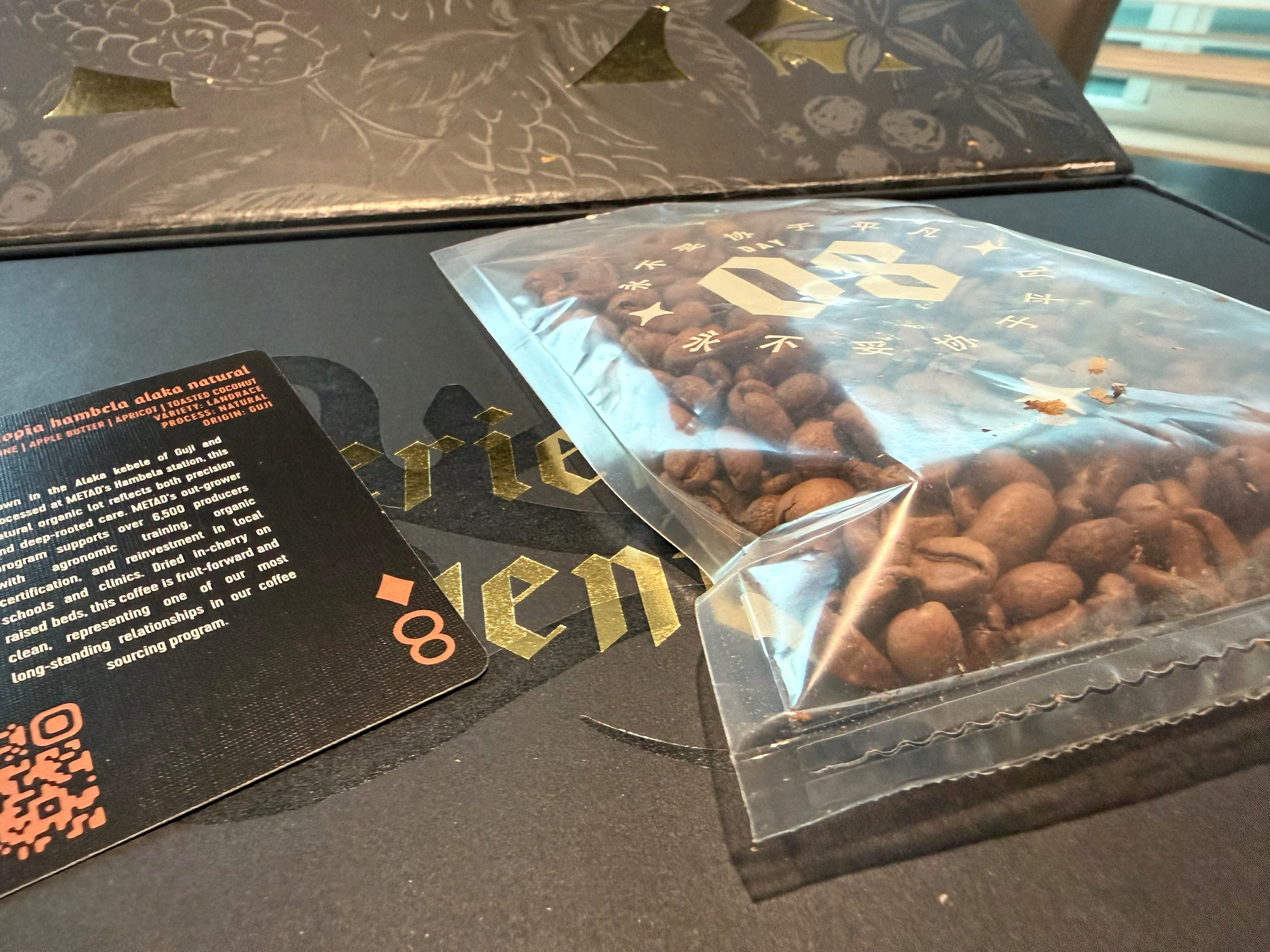
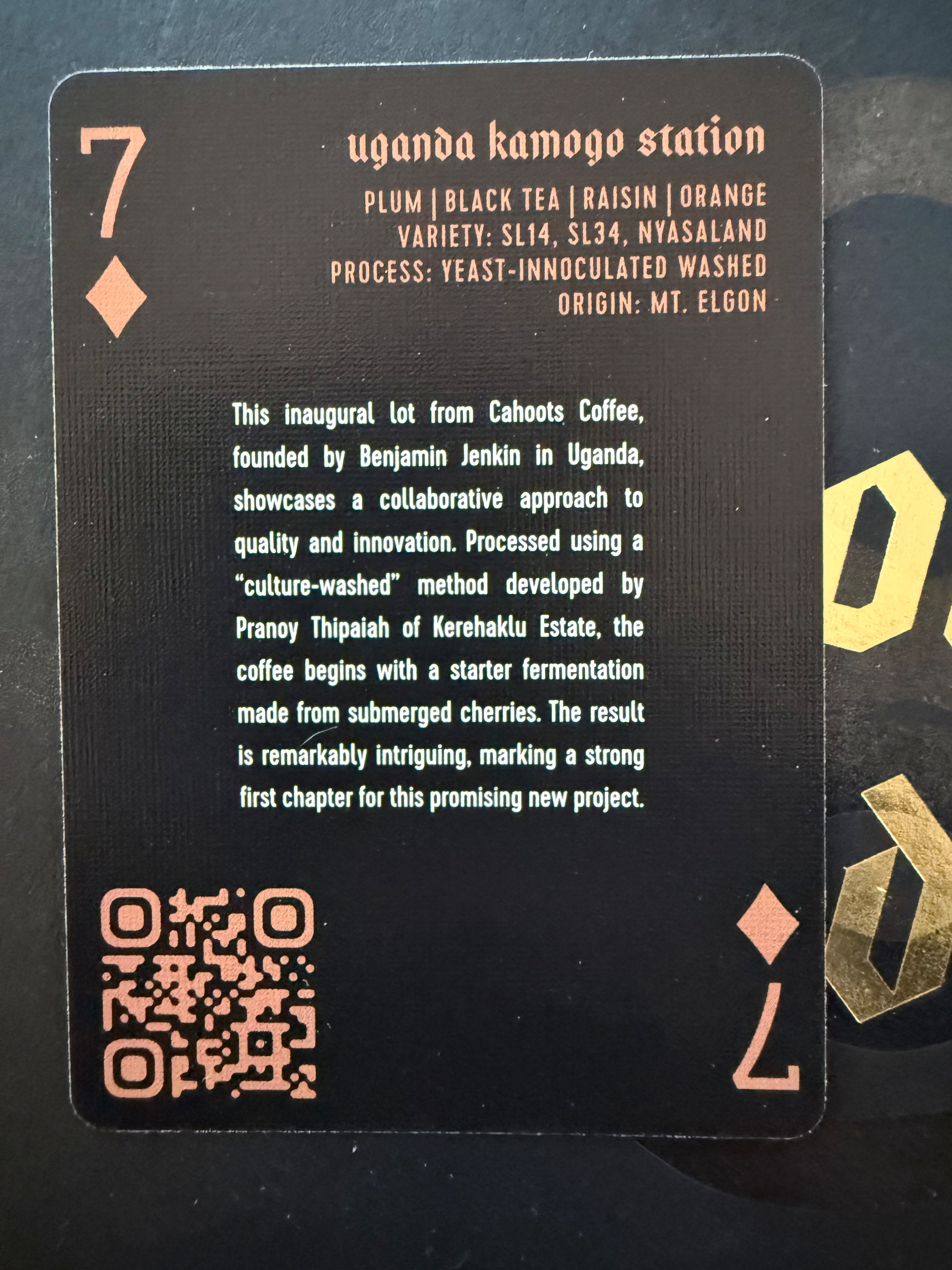
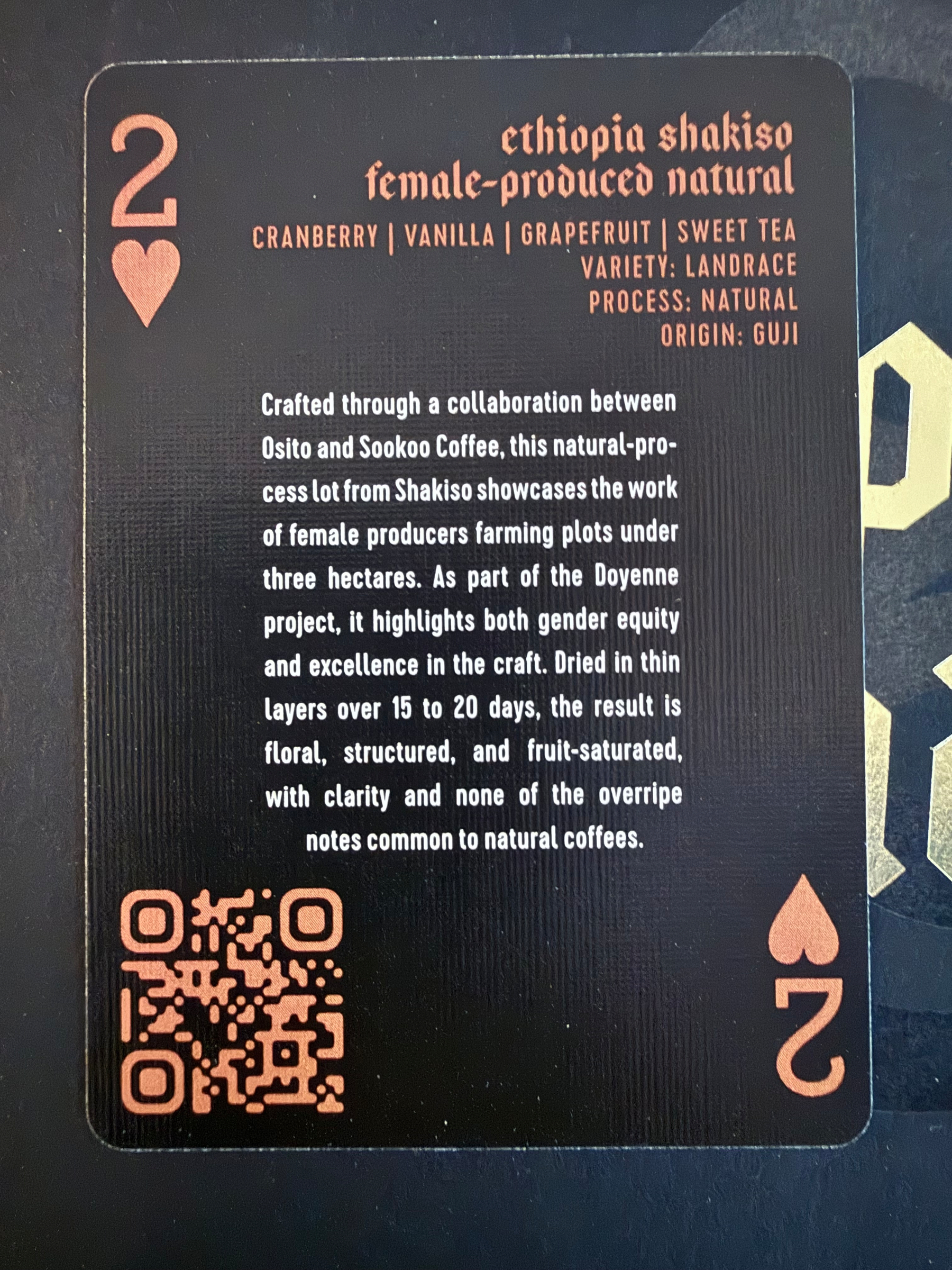
Day 2 — Ethiopia Shakiso Female-Produced Natural

Cranberry • Vanilla • Grapefruit • Sweet Tea

Process: Natural | Origin: Guji | Variety: Landrace

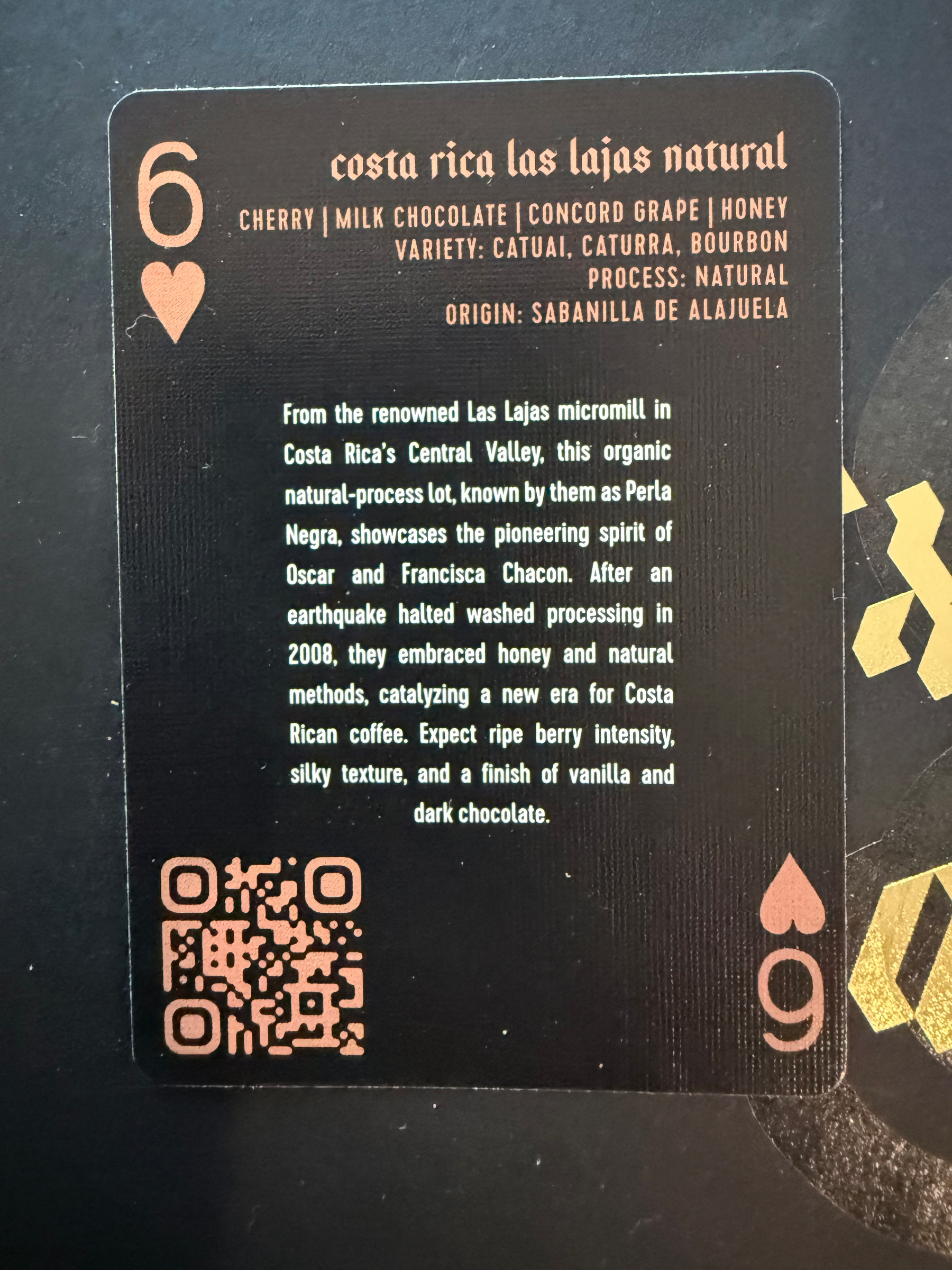
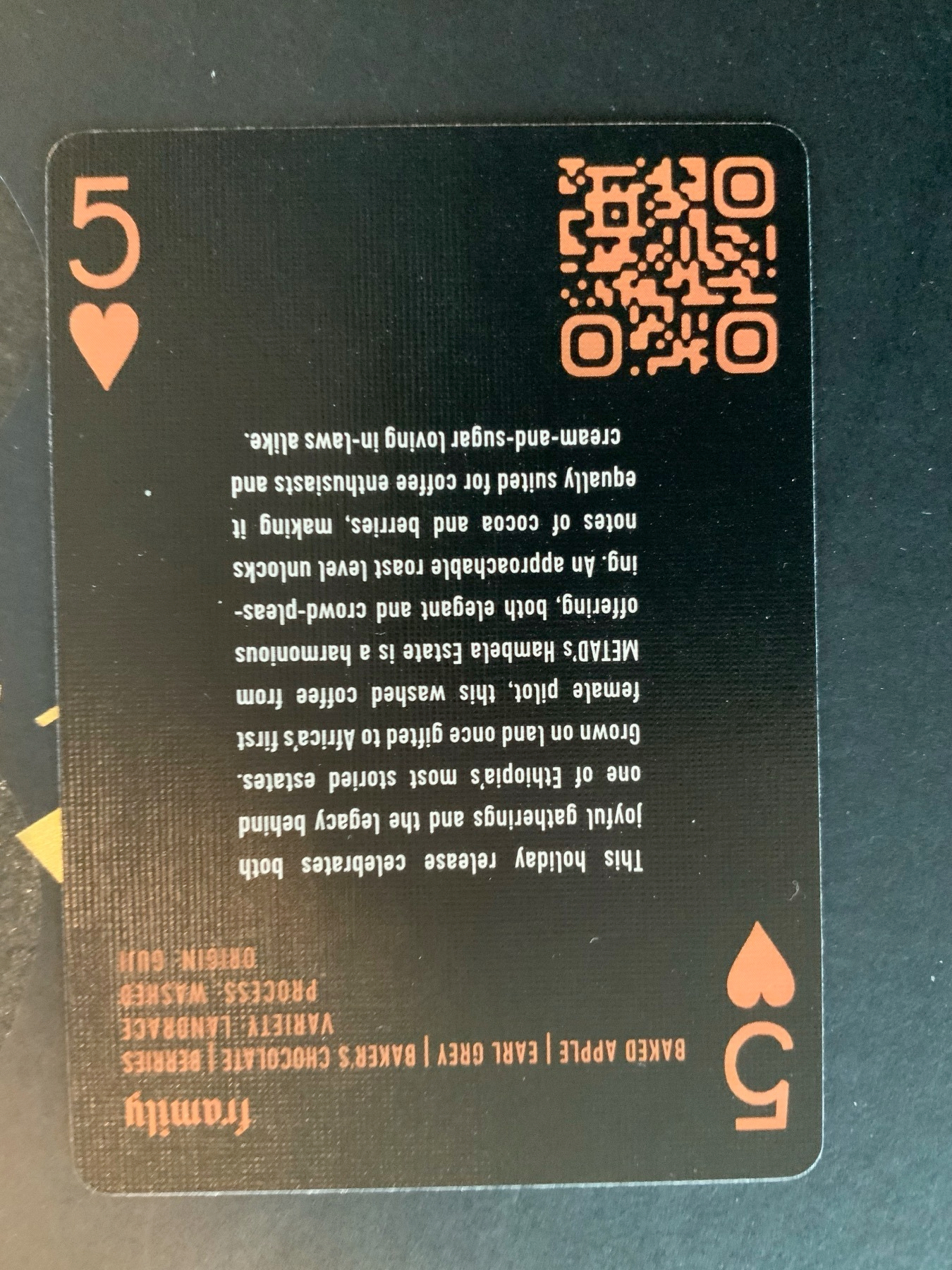
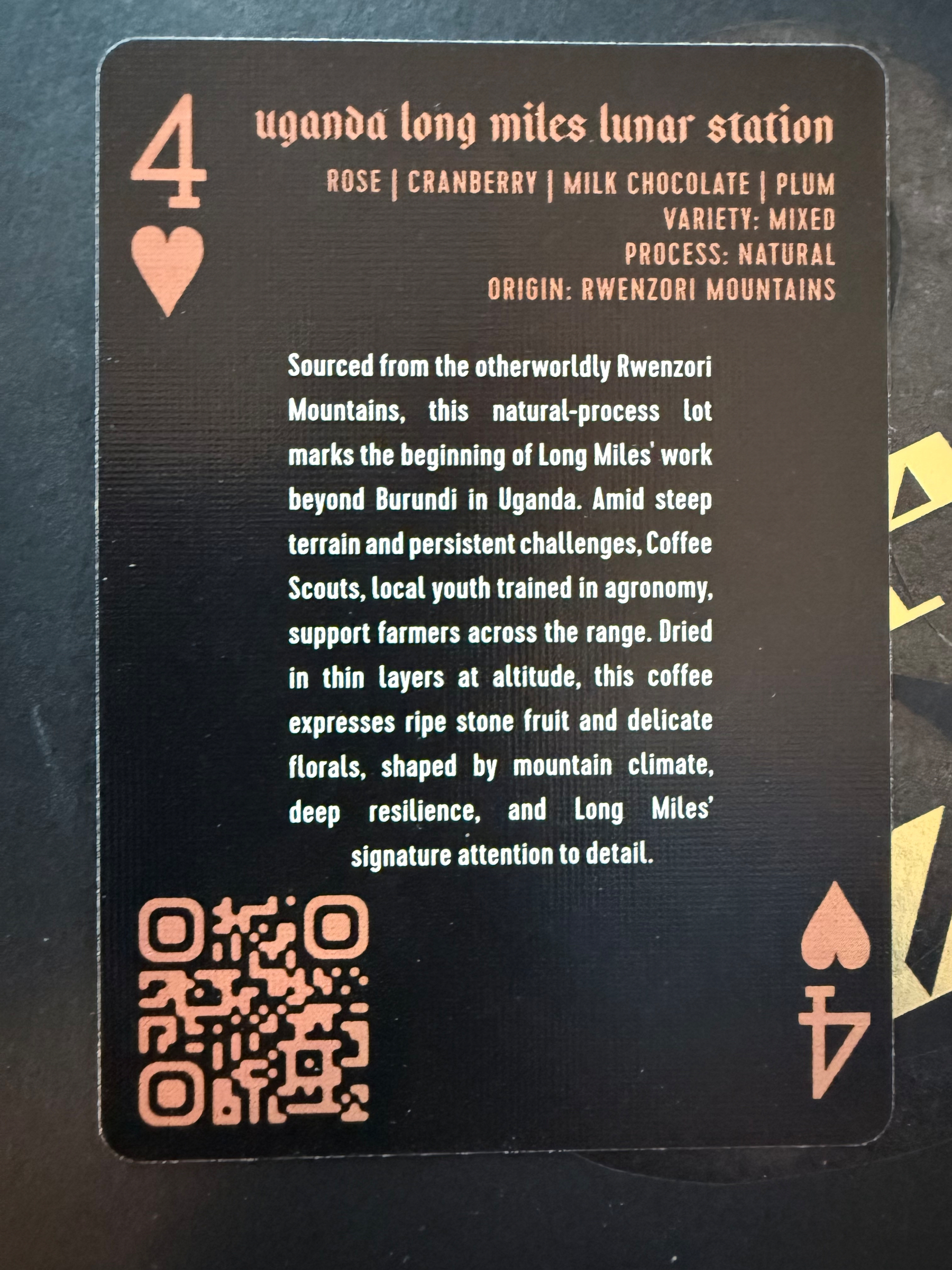
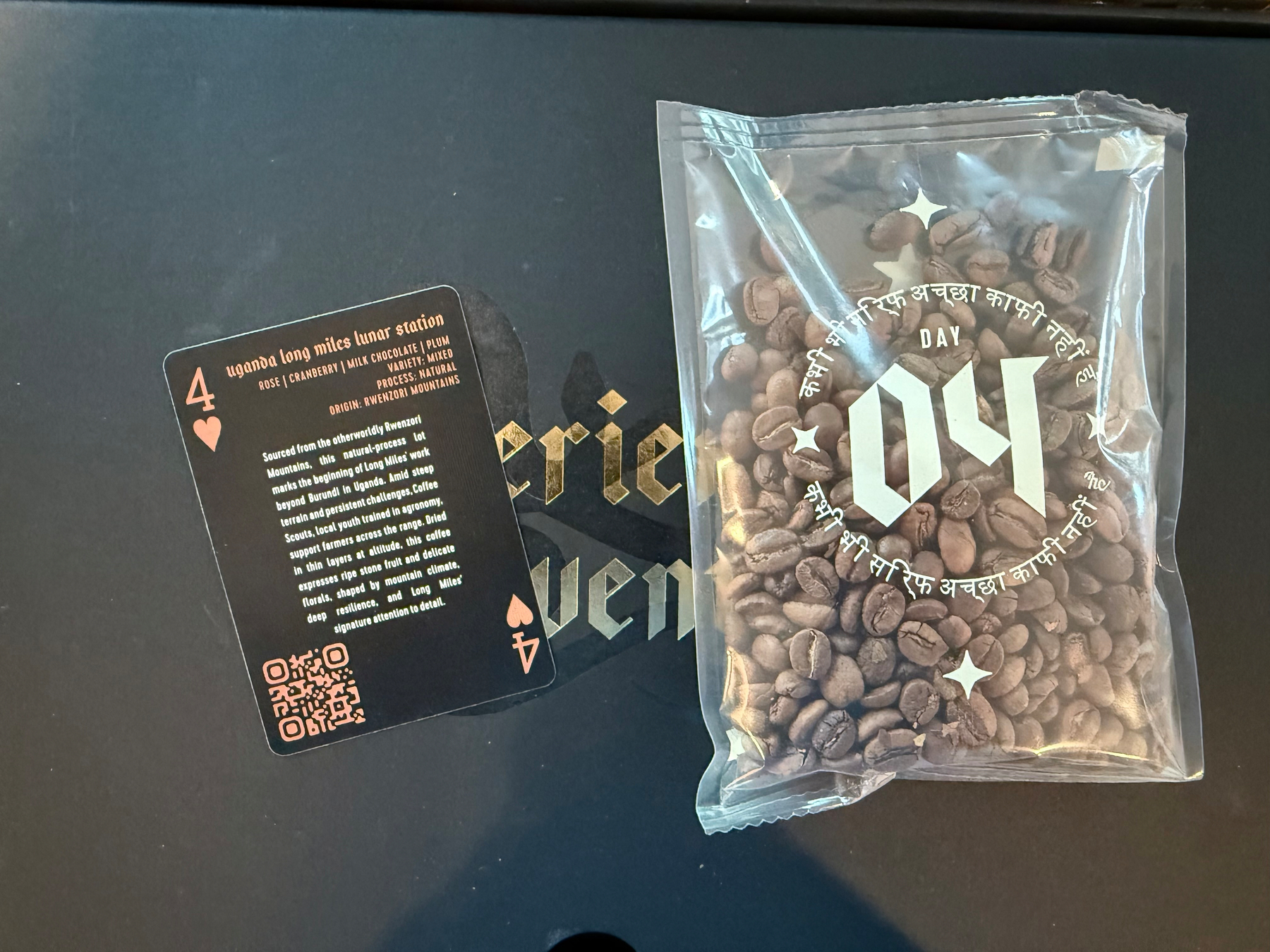
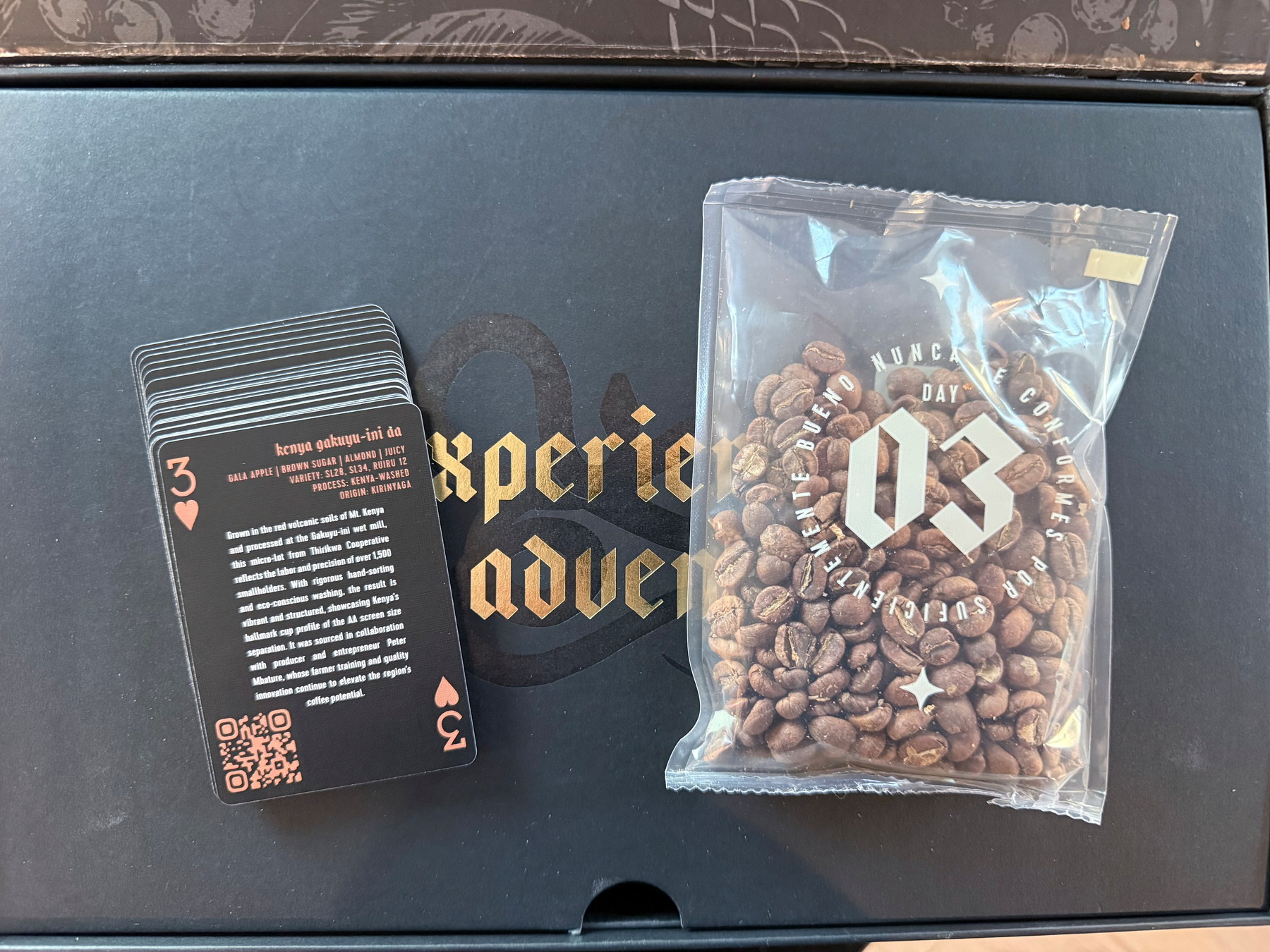
Day 2 dealt us the Two of Hearts, which feels appropriately sentimental for a coffee born from collaboration, craft, and deeply intentional farming. The card reads like a love letter to the producers—thin-layer drying, 15–20 days, clarity over chaos, fruit without the funk. Basically: a natural process that has its life together.

First Impressions: “This Smells Like Nature’s Hardcover Edition”

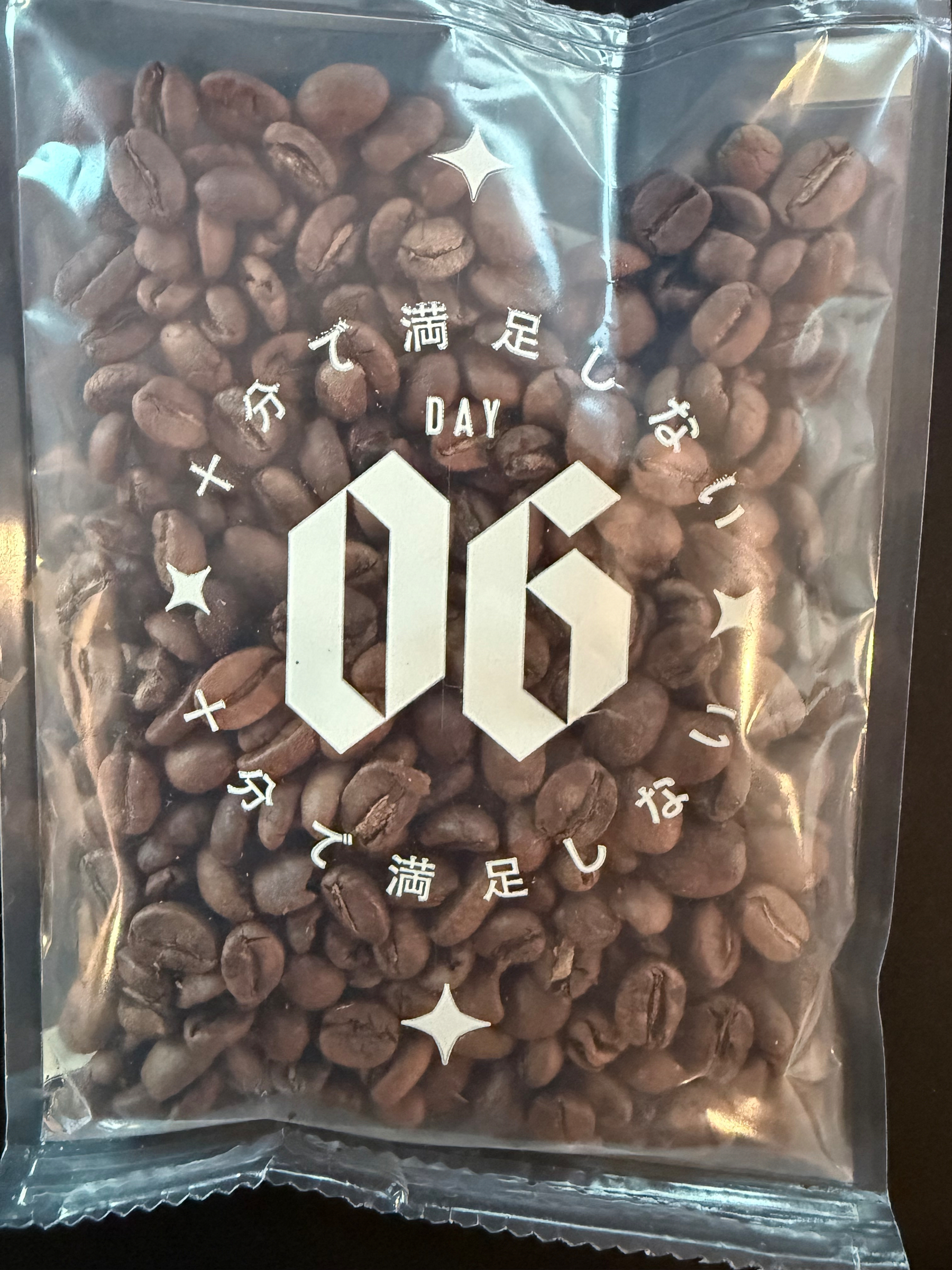
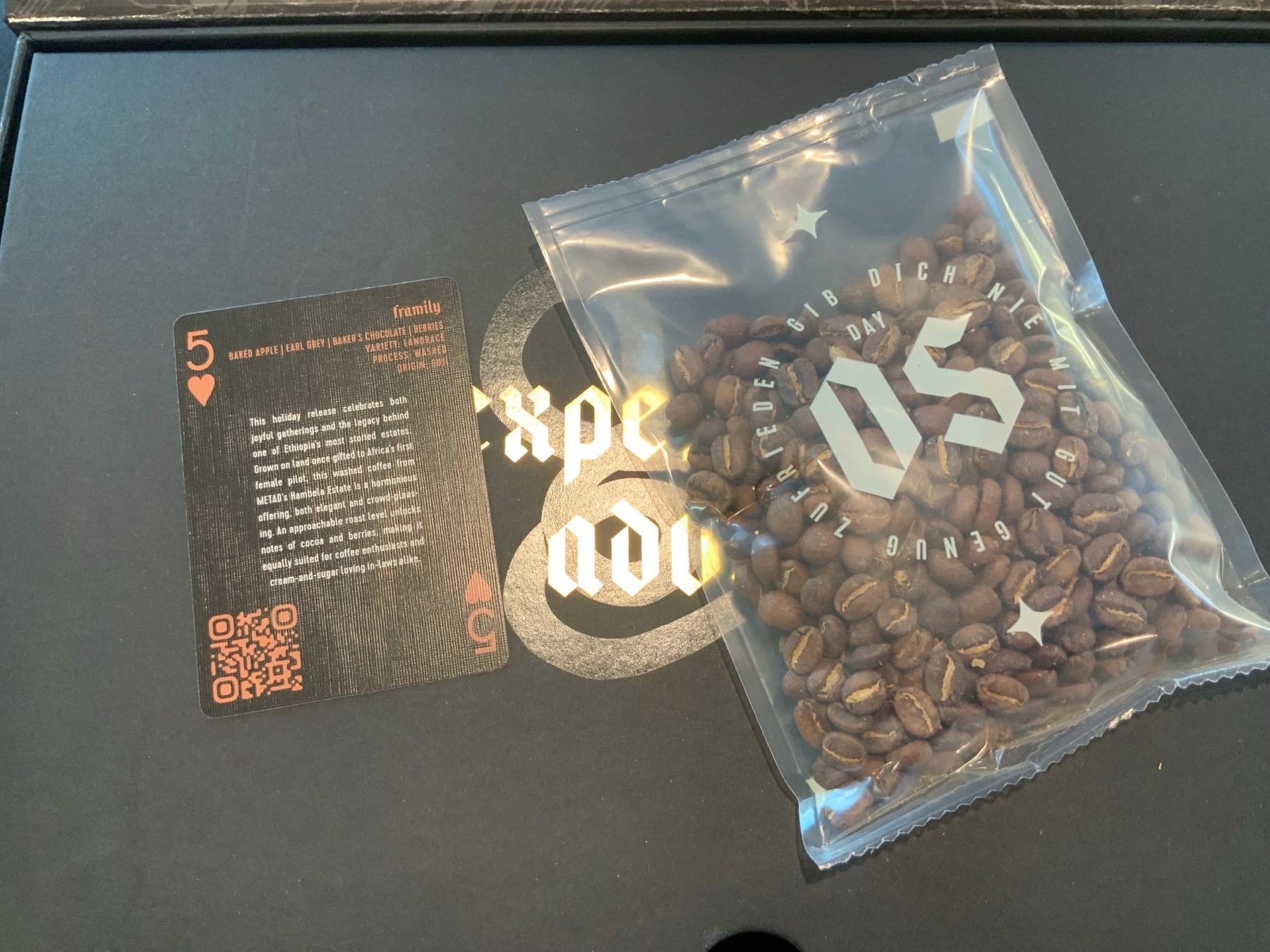
One whiff of the beans and it’s clear why Onyx described this thing like a botanical encyclopedia. Tea leaves. Wild herbs. The sort of aroma that makes you feel like you should be wearing linen.

Natural process coffees often sprint into the “overripe fruit smoothie left on a porch” zone—but not this one. This one has restraint. Manners, even.

Dose & Chaos Theory

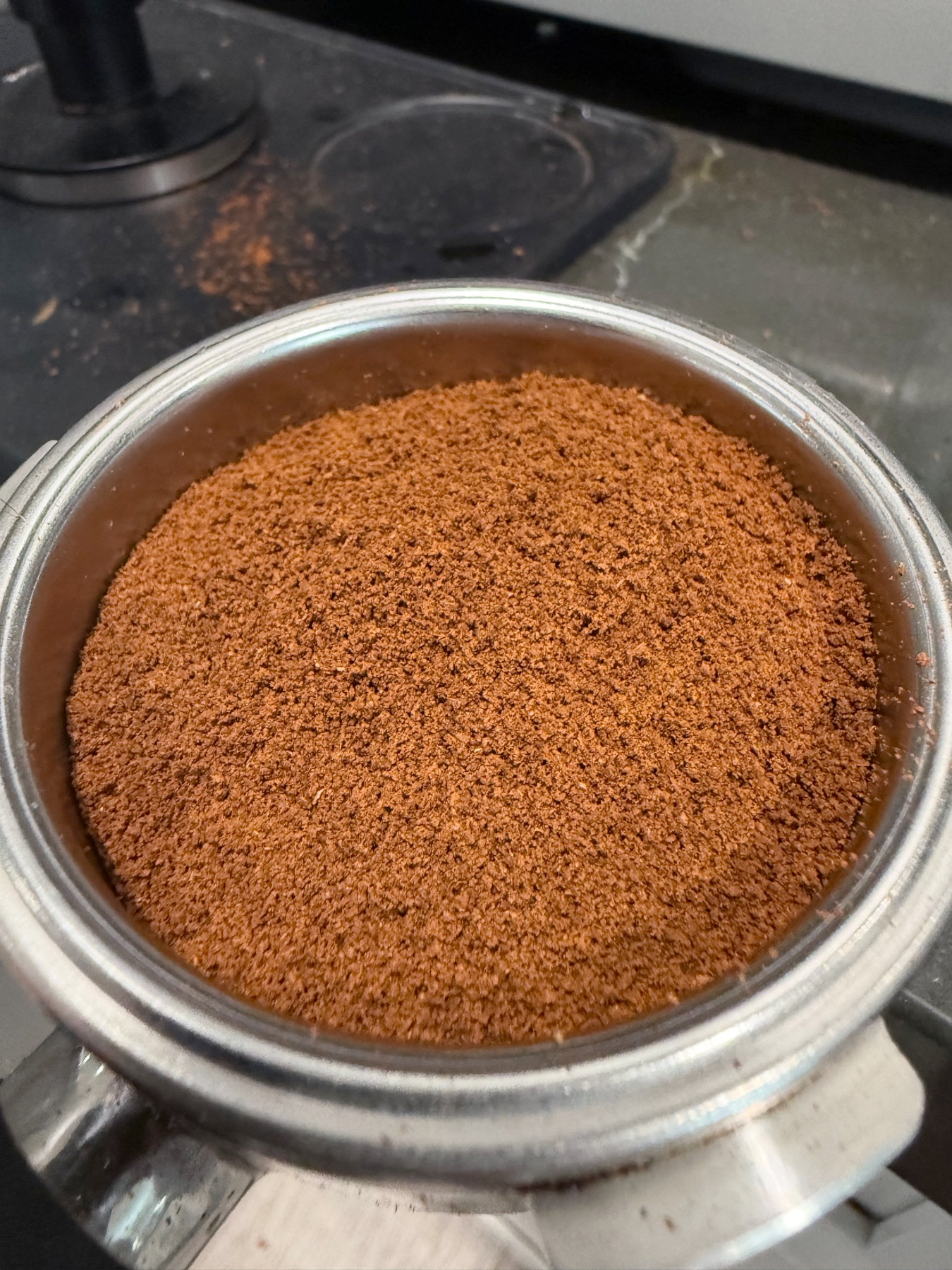
You aimed for 18.2g. You got… well… more than that. The scale had its own plans, but the grinder always wins these arguments, so into the hopper it went.

The first grind: –5. A bold, borderline-reckless move. The kind of move that says, “We ride at dawn.”

The espresso machine responded with a polite but firm: No.

A tiny drizzle of liquid squeaked out like the machine was whispering, “Please reconsider your life choices.”

Thus began the Ritual of Adjustment.

Bloom, Backflow, and the Austenian Drama of Dial-In

You stopped the shot. You let it backflow. You tried again.

A heroic effort, but –5 was still too fine—espresso sludge territory.

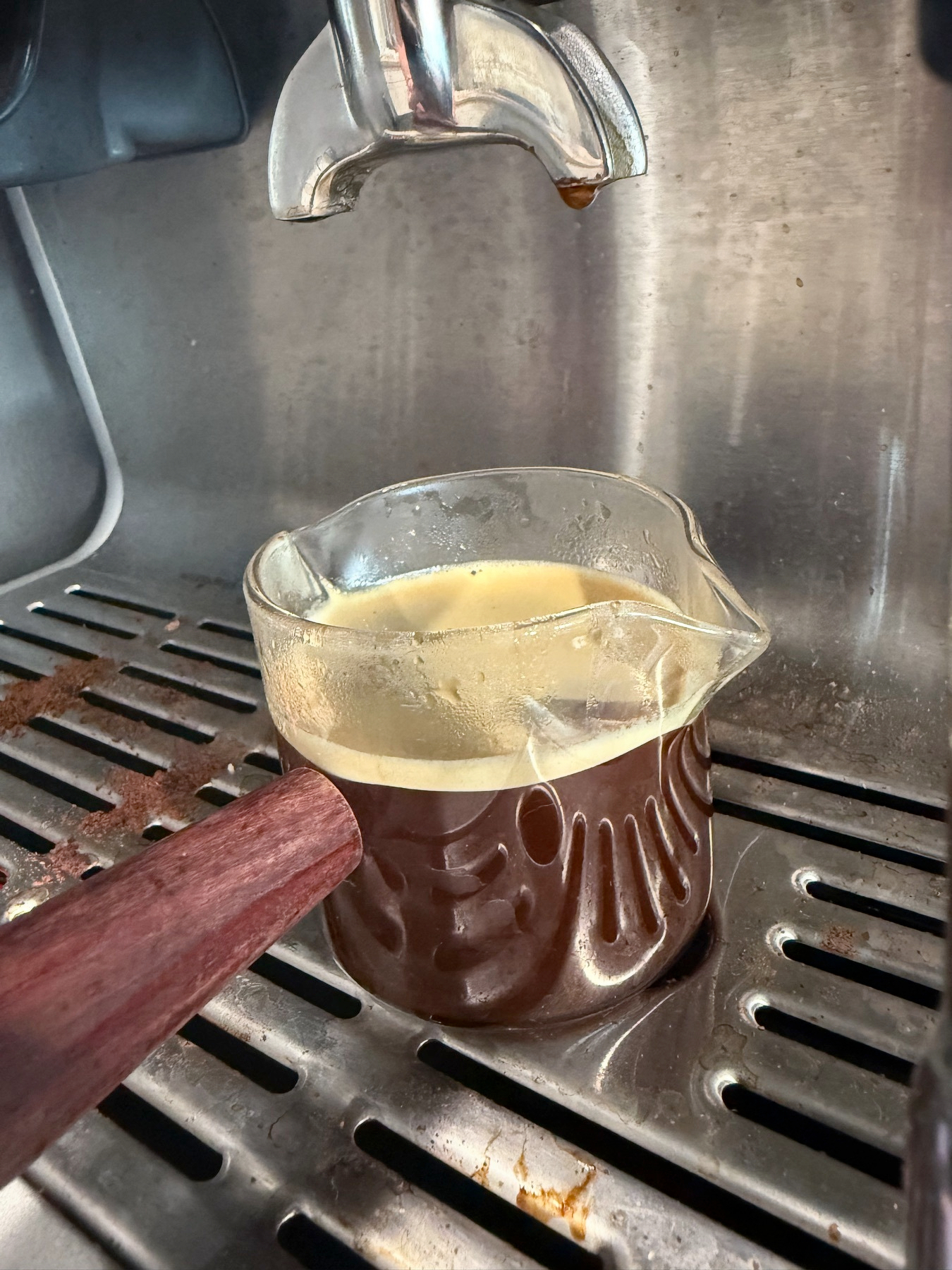
So the grinder moved to –2, which immediately felt like the Goldilocks zone. The pressure built. The stream turned dark and steady. The crema layered like a velvet curtain dropping on cue.

A proper espresso shot was born.

The Tasting: Fall in a Cup, But Make It Ethiopian

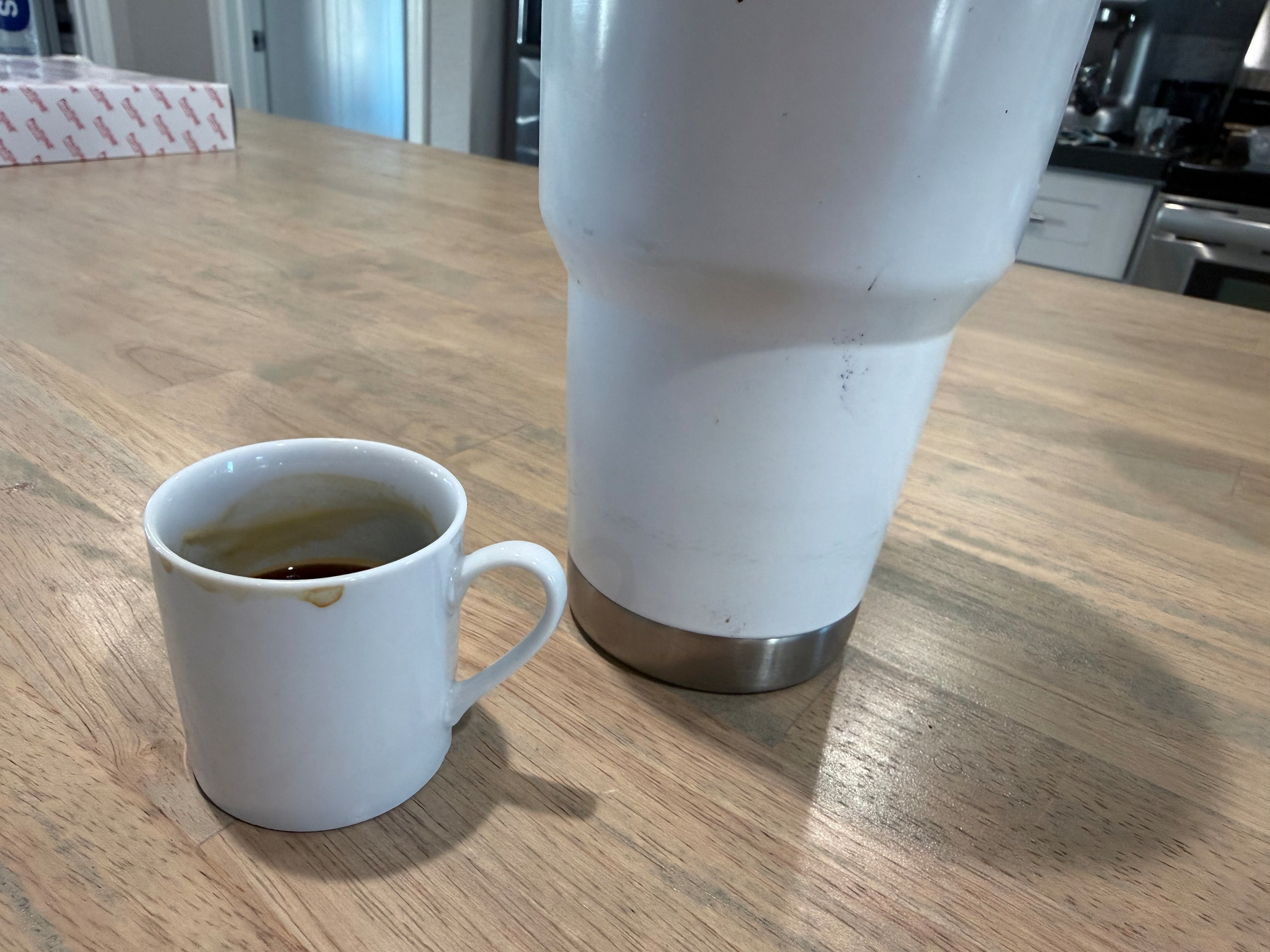
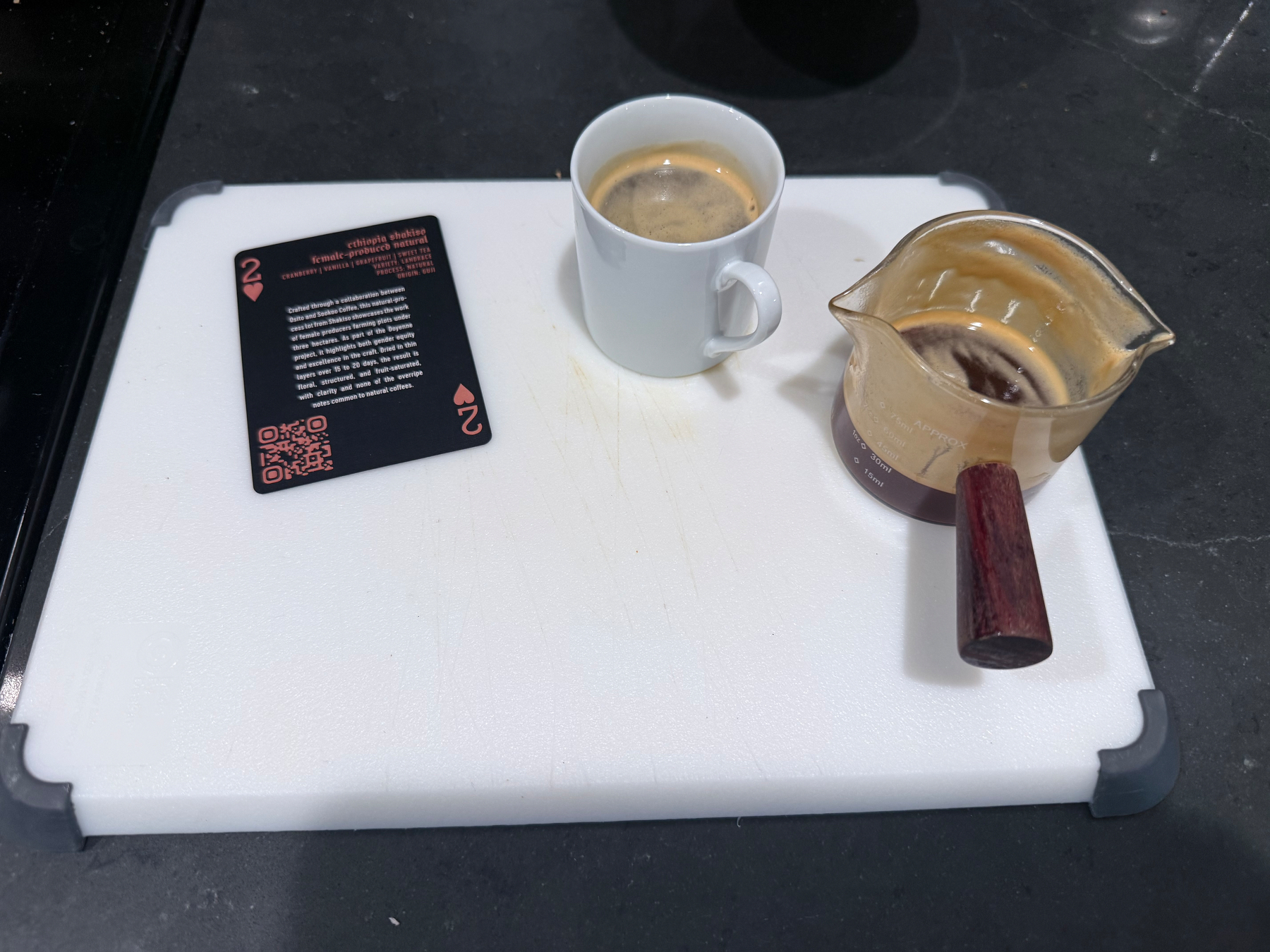
The hot shot first: • Bright tartness up front • A cranberry-meets-raisin sparkle • Vanilla hovering like gentle background music • And the kicker: a sweet tea finish so unmistakable it practically asked for a porch swing

This thing is leafy in the best way. Organic. Light. Structured. A warm-fall-afternoon kind of vibe—the part of autumn before society forces you into decorative gourds.

Then came the iced Americano version, because desert life demands it. Somehow the cold version amplified that sweet tea note even more, as if the coffee said, “You want tea? Say no more, fam.”

Verdict

A graceful, fruit-forward natural that never slips into overripe territory. It’s airy, clean, and strangely nostalgic—a coffee that tastes like the moment summer hands the keys over to fall.

Dial-in adventure aside, this one is a keeper.

Day One: Aponte Village Honey

Day 1 — Onyx Coffee Lab Advent Calendar 2025

Aponte Village Honey — Colombia

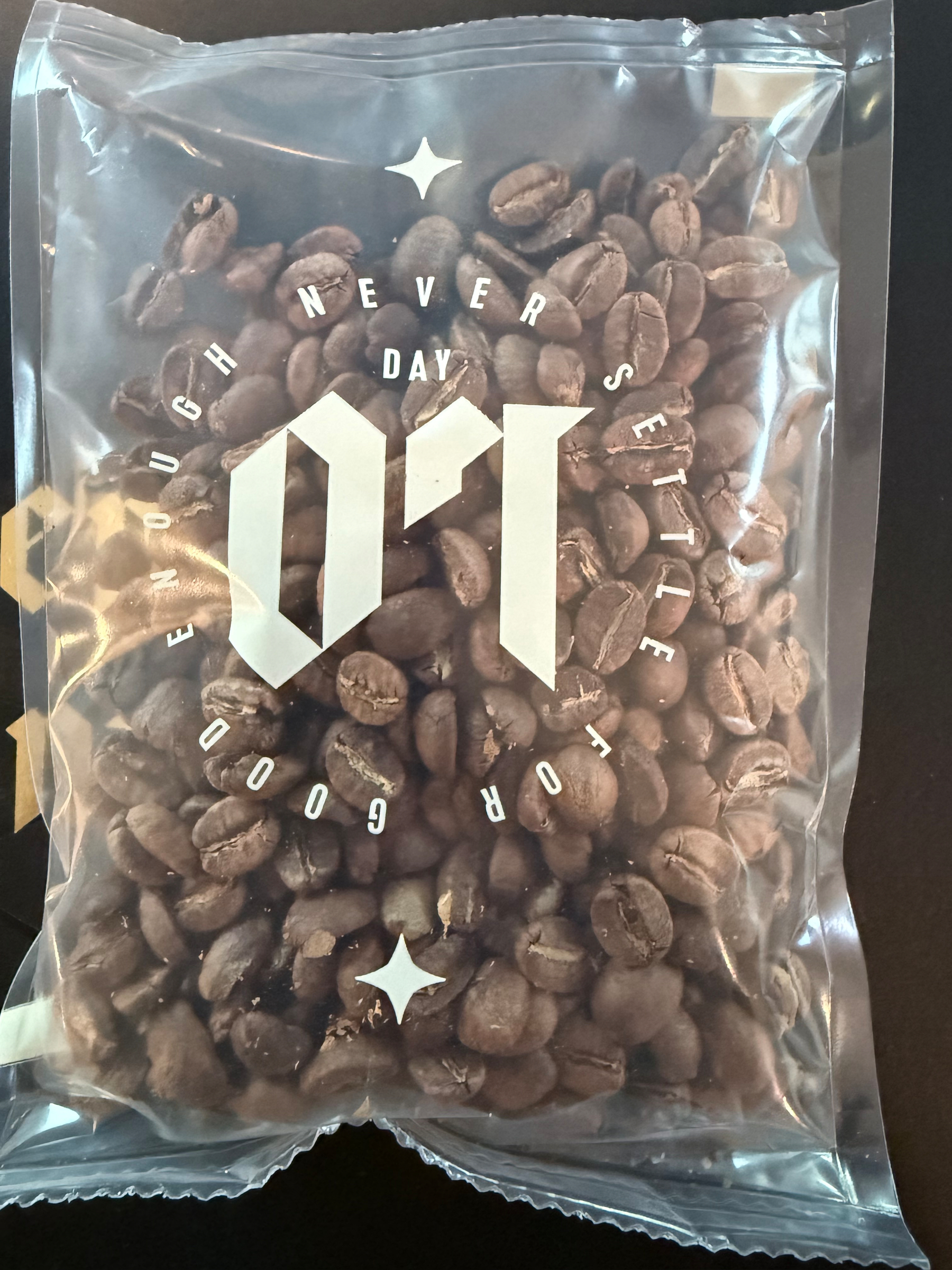
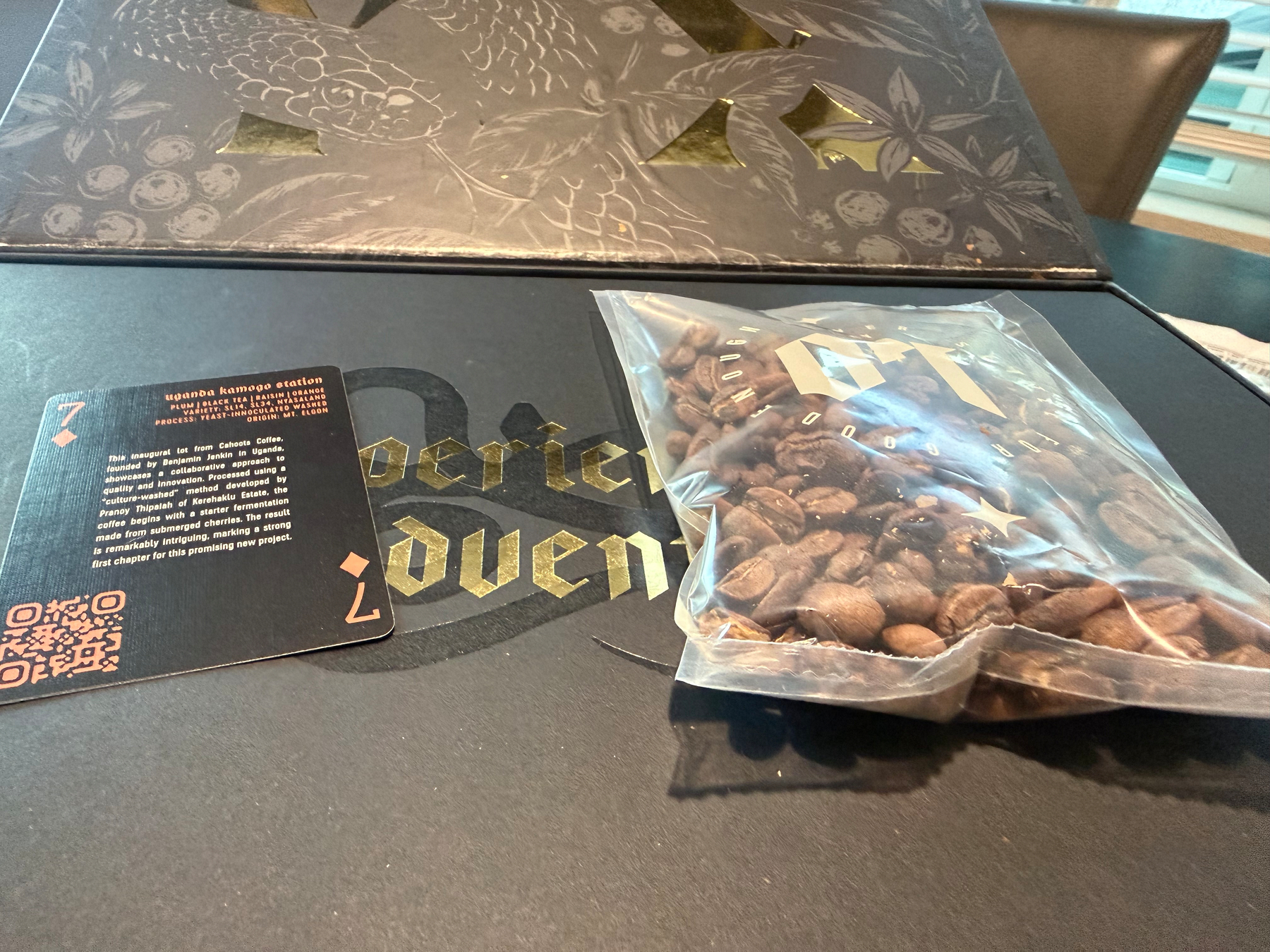
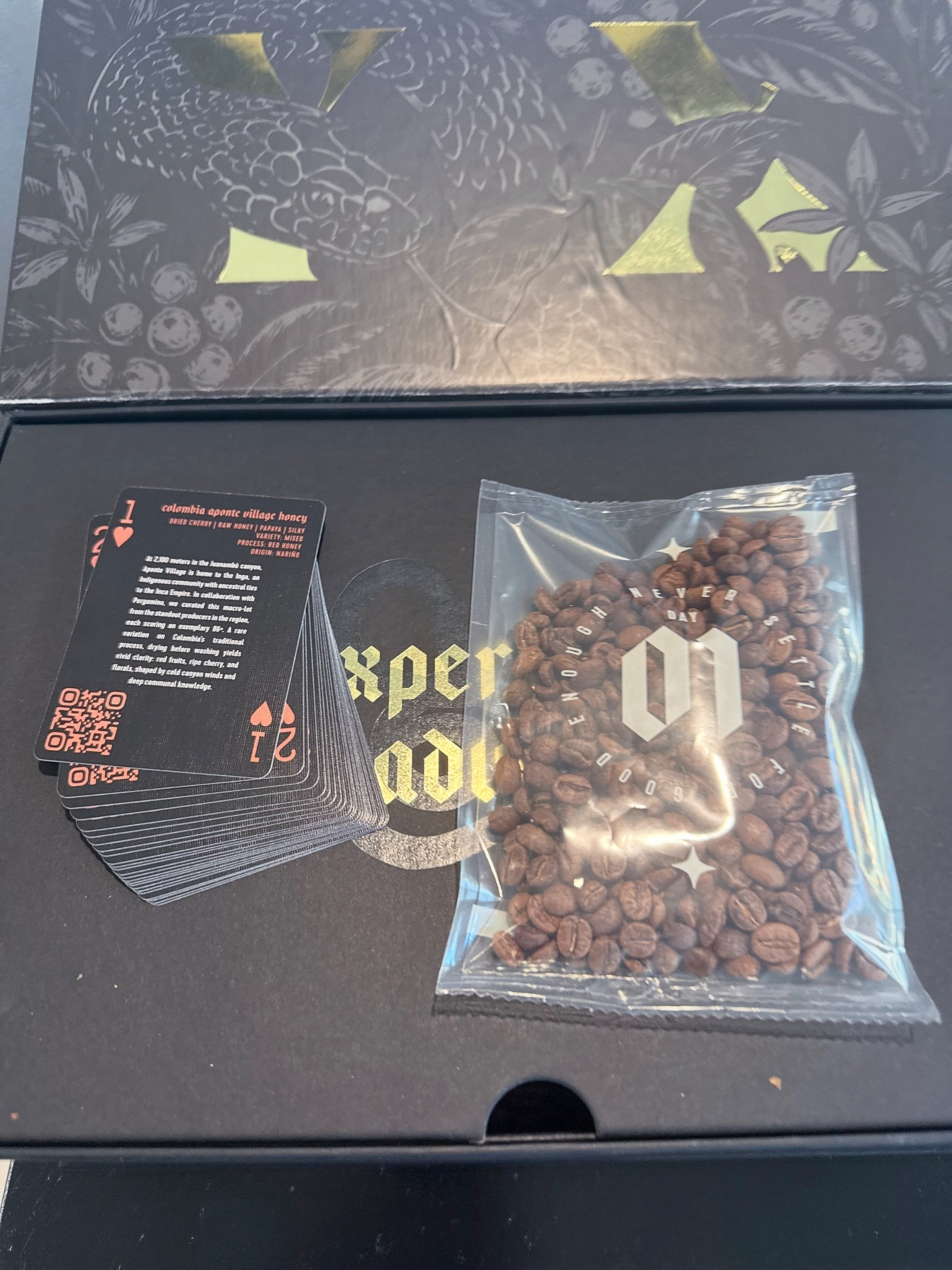
The first door of the Onyx Advent Calendar is a lot like opening the first gift of the season—you know it’s small, but you hope it shakes in a promising way. This one absolutely did. Day 1 delivered Colombia Aponte Village Honey, and right from the bag it had that “I’ve been practicing my moisturizers” light-and-earthy vibe. Think cherry wood. Think forest floor… but the classy part of the forest, not the part where raccoons do taxes.

The Weigh-In: Precision, But Make It Festive

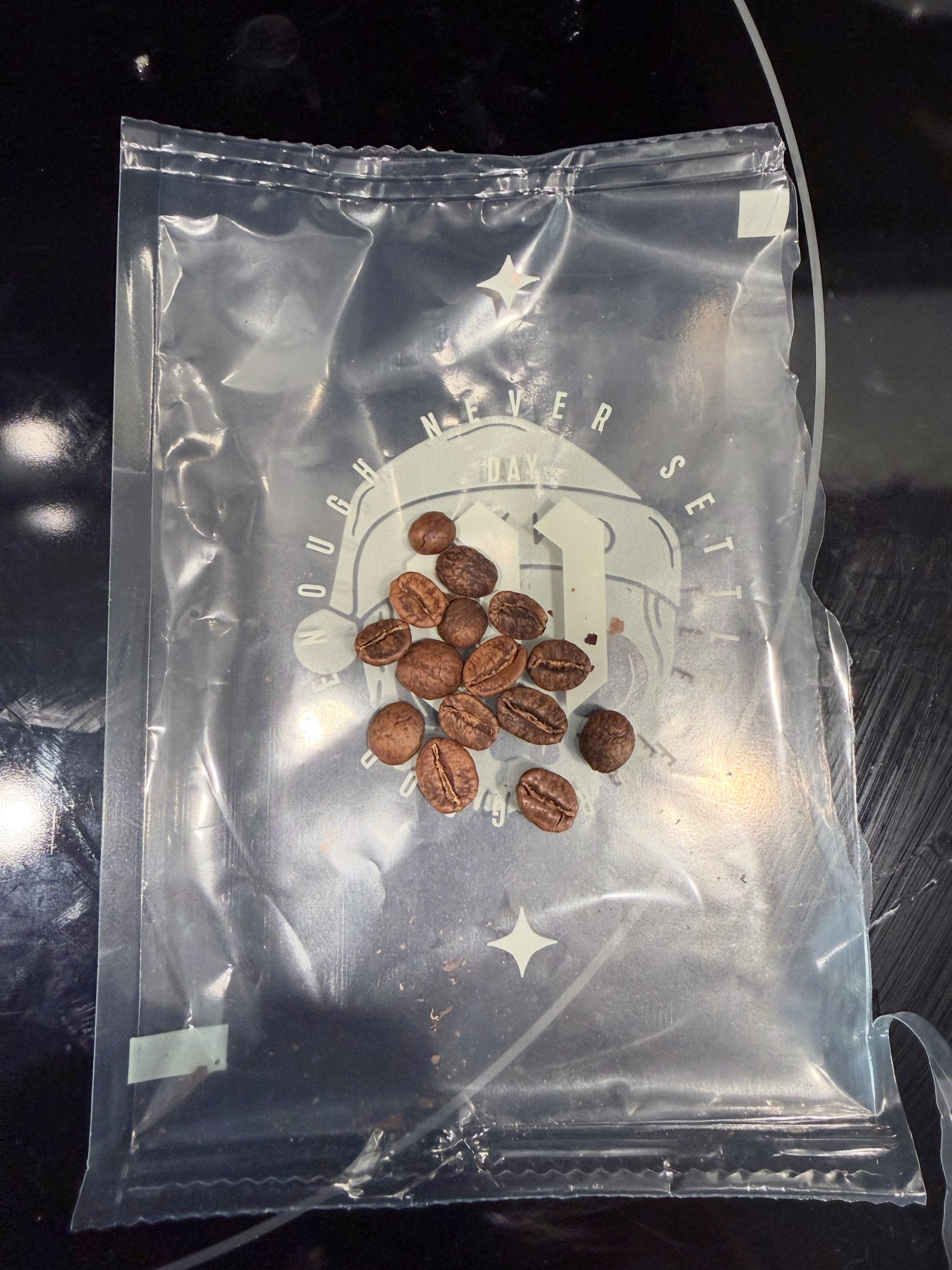
The bag said one thing. The scale said 56.7 grams. A whimsical little bonus—like finding an extra fry at the bottom of the takeout bag. Into the hopper it went.

These beans were light. Not “delicate.” Not “spry.” Light as in: if you sneezed, they’d try to leave the room.

Which meant: brittle. And brittle beans tend to grind fast. Like, espresso-machine-thinks-you’re-speedrunning fast.

Dialing In: Zero, Baby

I slammed the grinder to zero—not metaphorically. Literally zero. Coffee nerds may clutch their pearls, but the first shot actually looked… right? Blonding a bit early, sure, but acceptable for a first dance.

Shot one down. The machine humming along. I set it up for a second pull while reading the tasting card like it was ancient scripture:

“2100 meters… ancestral ties to the Inka Empire… drying before washing… vivid clarity, red fruits, bright cherry, florals…”

Basically: a coffee that has a better historical résumé than most people I know.

The Aroma (or Lack Thereof)

Oddly mild on the nose. A shy coffee. No big aromatic swell. More like a quiet nod from across the room. But in the portafilter? It expanded like a marshmallow in the microwave. Wild.

Shot two came ripping through—fast enough that the machine sounded like it might file a complaint. These beans weren’t dry, just light, and light beans move through a grinder like they’re being chased by consequences.

So, time to crank that grind tighter.

Pull Three & The Ritual of Ice

You know the drill. Pull the shots. Pour over ice. Ignore the purists who gasp like Victorian novel characters every time you do it.

The third shot was richer, deeper—finally hitting that sweet spot where grind, dose, and fate align. Darker crema. Slower pull. A proper “we’re doing science” moment.

The Flavor

Here’s where this coffee earns its Day 1 badge.

In the cup: • Light cherry wood • A gentle earthiness • A whisper of dried cherries • And that raw honey note the bag promised… but only after the sip, like a callback joke in a comedy special

The acidity? Barely there. Smooth as a baby goat in a silk robe. 🐐

Verdict

A fantastic opener. Mild but confident. Like a warm-up track from a band that knows the encore is going to melt your face later in the month.

If the rest of the calendar keeps this energy, we’re in for a very caffeinated, very delightful December.

Building From First Principles

Their code pretty much reflects this philosophy: Plain, boring and concise with no fluff. You can easily read it top to bottom without needing to jump around to get the bigger picture. There is very little noise there. There is this pragmatic minimalism to it. You won’t find layers of abstractions for abstraction’s sake. The biggest “debate” - if you could even call it that - usually revolves around how to structure data or where to put side effects.

Clarity is key indeed.

The killer feature of Web Components - daverupert.com

API extraction through TypeScript or JSDoc isn’t a novel concept, but what I find novel is the community tooling built around it. With a Custom Element Manifest, community plugins can use that information to generate files, populate dropdowns, add red squiggles, provide autocomplete, and automate a lot of the mundane meta-system DX work that comes with supporting a component library:

Ok. That’s pretty rad.

RSL Collective

The nonprofit RSL Collective brings together millions of online publishers and creators to protect their rights and negotiate for fair compensation from AI companies.

Definitely something to keep an eye on moving forward.

Why America doesn’t build enough housing | Vox

Zoning rules prohibit the construction of apartment buildings on roughly 75 percent of America’s residential land. Throughout much of this territory, land-use laws effectively require all single-family homes to be spacious (and thus, pricey to build or buy). Even in city centers, parking mandates often make multifamily housing financially or physically nonviable.

Just nuts. No great mystery why there isn’t enough housing. 🙄

Base 3.0 Released | Menial

The app has had a major overhaul to all areas while keeping a familiar UI. Base 3 is faster, more capable and even nicer to use.

Very nice.

Gavin Newsom just weakened California’s signature environmental law. That’s good. | Vox

In making it easier to build urban housing — despite the furious objections of some environmental groups and labor unions — California Democrats put material plenty above status quo bias, and the public’s interests above their party’s internal harmony.

Better. I want more.

Could floating solar panels on a reservoir help the Colorado River? - Ars Technica

In September, GRIC is planning to break ground on another experimental effort to conserve water while generating electricity: floating solar. Between its canal canopies and the new project that would float photovoltaic panels on a reservoir it is building, GRIC hopes to one day power all of its canal and irrigation operations with solar electricity, transforming itself into one of the most innovative and closely watched water users in the West in the process.

As someone in Arizona that spends a lot of time walking the canals, there’s one that runs close to my house, a great place to walk the dog or for jogging, I think this is a great idea.

Worthy of a “Finally”

For the past 17 years, I’ve been chasing a dream.

Not a startup IPO. Not a billion-dollar exit. Just one thing: to launch my own app in the App Store.

Seventeen years. That’s older than some developers now shipping their own indie apps. In that time, I’ve started and stopped more projects than I can count. I’ve sketched wireframes in coffee shops, coded into the night after work, tried learning new languages, jumped between frameworks, abandoned ideas halfway through, gotten distracted by other responsibilities–and sometimes, I’ve just run out of steam.

There were dozens of beginnings that went nowhere. Notes in old notebooks. Xcode projects lost to time. GitHub repos full of good intentions and TODO comments. Each time, I told myself “maybe next time” or “this just isn’t the right idea.” And each time I watched others launch, I quietly wondered if I’d ever get there myself.

The truth is, it never stopped mattering to me. Even when life got busy–kids, jobs, burnout–I still carried this tiny ember of hope that someday I’d ship something of my own. Not for money. Not for fame. Just to prove to myself I could finish. That I could take an idea all the way from a blank screen to someone tapping “Get” on their iPhone.

And now… I finally have.

This week, after nearly two decades of trying, I submitted my app to the App Store. And it was accepted.

I keep opening the App Store just to see it there. My app. With a name, an icon, a real page. It still doesn’t feel real. I’ve cried. I’ve smiled. I’ve just sat in silence, overwhelmed.

I know there are people who crank out apps every few months. I admire them. But for me, this moment is sacred. It’s not just about this app–it’s about every failure that came before. Every lesson I had to learn. Every time I kept going, even when it felt like I never would get here.

To anyone reading this who’s still trying, still failing, still dreaming: don’t give up. Your timeline doesn’t have to match anyone else’s. Your path might wind and stall and break and restart. But if it matters to you, keep going.

Because one day, your app might just show up in the App Store. And I promise–it will feel like everything.

Report: Apple will jump straight to “iOS 26” in shift to year-based version numbers - Ars Technica

There may never be an iOS 19 or a macOS 16, according to reporting from Bloomberg’s Mark Gurman. At its Worldwide Developers Conference next month, Apple reportedly plans to shift toward version numbers based on years rather than the current numbering system. This is intended to unify the company’s current maze of version numbers; instead of iOS 19, iPadOS 19, macOS 16, tvOS 19, watchOS 11, and visionOS 3, we’ll get iOS, iPadOS, macOS, tvOS, watchOS, and visionOS 26.

That’s a nice quality of life update.

Waiting for App Review is Emotional Damage

There’s a special kind of purgatory that comes from submitting your app to the App Store. It’s the modern-day equivalent of sending your kid off to their first day of school–you’ve dressed it up, fed it well, double-checked its backpack for bugs, and now… you wait. And wait. And refresh App Store Connect like it owes you money.

I submitted JournalPlus (my lovingly crafted, slightly obsessive ode to daily themes and intentional living) to Apple for review. And now I am absolutely not pacing back and forth refreshing my email every 3 minutes like a sane person.

This is the part no one tells you about in the indie dev stories. They tell you about the design, the code, the user onboarding flows–but not about the emotional death spiral that is “Waiting for Review.”

Meanwhile, my brain has chosen to cope in the only way it knows how: frantically making a list of all the things I’m going to fix once it’s approved. You know, because it’s totally rational to make a post-launch roadmap before you’ve even launched.

So far the list includes:

  • Better onboarding animations (because what if the confetti isn’t whimsical enough?)
  • A celebratory “YOU DID IT” llama when you complete a daily action
  • A long overdue dark mode easter egg (👀)
  • Tweaking that one shadow that’s 2% off and haunts me
  • Thinking about Android. Again. Briefly. And then closing the tab.
  • Writing another blog post to distract myself from refreshing the status again.

Anyway, this post is mostly a stall tactic, but also a little time capsule of this oddly magical/frustrating moment. If you’ve been here, you know. And if you haven’t–just wait.

Literally. Just wait.

– Jesse 👨‍💻⏳📱

Probably refreshing App Store Connect right now

CarPlay Ultra, the next generation of CarPlay, begins rolling out today - Apple

Starting today, CarPlay Ultra, the next generation of CarPlay, is available with new Aston Martin vehicle orders in the U.S. and Canada, and will be available for existing models that feature the brand’s next-generation infotainment system through a software update in the coming weeks

Announced in 2022 initially, and now finally available.

Pete Rose, ‘Shoeless’ Joe Jackson among players reinstated by MLB - ESPN

“Therefore, I have concluded that permanent ineligibility ends upon the passing of the disciplined individual, and Mr. Rose will be removed from the permanently ineligible list.”

Manfred’s decision ends the ban that Rose accepted from then-commissioner A. Bartlett Giamatti in August 1989, following an MLB investigation that determined the 17-time All-Star had bet on games while managing the Cincinnati Reds.

Wow. While I’m not much of a baseball fan these days. The idea of ending Pete Rose and Joe “shoeless” Jackson is just nuts. I didn’t think I’d ever see the day.

Apple: “Hundreds of millions to billions” lost without App Store commissions - Ars Technica

“The new rules profoundly undercut the integrated iOS ecosystem that this Court sustained as lawful and that is the foundation of user trust and confidence in the App Store,” Apple’s motion reads. Compliance with the order would cost “hundreds of millions to billions” of dollars, “which Apple can never recoup,” Apple argues.

Hahahahahhahahahah. 😂 Apple playing the “woe is me, we’re losing so much money, we wouldn’t be able to survive?!?” card is, in itself, hilarious.

Comcast president bemoans broadband customer losses: “We are not winning” - Ars Technica

Comcast executives apparently realized something that customers have known and complained about for years: The Internet provider’s prices aren’t transparent enough and rise too frequently.

This might not have mattered much to cable executives as long as the total number of subscribers met their targets. But after reporting a net loss of 183,000 residential broadband customers in Q1 2025, Comcast President Mike Cavanagh said the company isn’t “winning in the marketplace” during an earnings call today. The Q1 2025 customer loss was over three times larger than the net loss in Q1 2024.

Shocking. 🙄

Man who built ISP instead of paying Comcast $50K expands to hundreds of homes - Ars Technica

Life has changed a bit for Mauch since he became an Internet provider. “I’m definitely a lot more well-known by all my neighbors… I’m saved in people’s cell phones as ‘fiber cable guy,'” he said. “The world around me has gotten a lot smaller, I’ve gotten to know a lot more people.”

I’d be open to running a neighborhood network for cheap reliable fiber to the home.

Nvidia starts producing its Blackwell AI chip at TSMC’s Arizona plant | The Verge

TSMC, or Taiwan Semiconductor Manufacturing Co., is the world’s biggest chipmaker and announced a $100 billion investment in US chipmaking last month. It began producing chips using the 4nm process at its Arizona factory in January and has plans to make chips with the more efficient 2nm technology by the end of the decade.

Well that’s impressive that they are producing 4nm and not legacy nodes and planning 2nm in the years ahead.

AI isn’t ready to replace human coders for debugging, researchers say - Ars Technica

“We believe this is due to the scarcity of data representing sequential decision-making behavior (e.g., debugging traces) in the current LLM training corpus,” the blog post says. “However, the significant performance improvement… validates that this is a promising research direction.”

This initial report is just the start of the efforts, the post claims.  The next step is to “fine-tune an info-seeking model specialized in gathering the necessary information to resolve bugs.” If the model is large, the best move to save inference costs may be to “build a smaller info-seeking model that can provide relevant information to the larger one.”

Safe for now I guess. 😉

Tim, don’t kill my vibe · Bryan Irace

Barring a sharp correction, Apple looks increasingly likely to miss out on a generation of developers conditioned to first reach for tools like Cursor, Replit, or v0—especially as Apple’s own AI tooling remains notably absent. This goes well beyond enabling new entrants to “vibe code”—experienced mobile developers who, despite history with Xcode and a predilection for building native apps, are begrudgingly swapping out their tools in acknowledgement of the inarguable productivity benefits.

I would say the tipping point has passed Apple by. As an institution they are unable or unwilling to self correct. High profit margins and market pressures won’t kick in until it’s far too late. (See Intel’s last decade of record profits before their recent collapse) The product of AI has come and passed Apple by. As a platform juggernaut they will use those platform and duopoly powers to hold tight and remain relevant.

Ending congestion pricing hurts low-income commuters | Vox

The early data suggests that congestion pricing is working just as it should, improving commute times and raising nearly $50 million in its first month

The reality is that the state of public transit in many American cities is abysmal and requires a lot of money. And the best solution to those transportation woes isn’t to make driving more affordable; it’s to make public transit more accessible for everyone.

Congestion pricing everywhere!

Speeding up the JavaScript ecosystem - Rust and JavaScript Plugins

shipped in Deno 2.2. There is still some work left to do to support ESLint’s config format, but you can already run (or write) raw ESLint plugins and have them run with deno lint.

Wow. That is really great. Fantastic walk through of the process.

Apple pulls encryption feature from UK over government spying demands | The Verge

Apple has stopped offering its end-to-end encrypted iCloud storage, Advanced Data Protection (ADP), to new users in the UK, and will require existing users to disable the feature at some point in the future. The move comes following reports earlier this month that UK security services requested Apple grant them backdoor access to worldwide users’ encrypted backups.

What the shit?!?!?

Systems: The Purpose of a System is What It Does - Anil Dash

The most effective and broadly-understand articulation of this idea is the phrase, “the purpose of a system is what it does”, often abbreviated as POSIWID. The term comes to us from the field of cybernetics, and the work of Stafford Beer, but this is one of those wonderful areas where you really don’t have to read a lot of theory or study a lot of the literature to immediately get value out of the concept. (Though if you have time, do dig into the decades of research here; you’ll enjoy it!)

The system isn’t broken. It’s working exactly as it was designed to. What to change to the system. Change its desired outcome, its incentives to be successful. That where the correction is needed.

Our lack of affordable housing is mucking up the American dream | Vox

What we have right now in America is a society that is increasingly marrying European levels of stasis to American levels of social welfare policy, and that is the worst of both worlds. We’re not helping people go where the opportunities are and we don’t help them where they’re living either. And that strikes me as dangerous and unsustainable and also inhumane. And so it’s a real choice that America faces at this moment to decide which of those two models it wants to pursue.